New Brunswick is the Maritime province a lot of people skip. They drive through on the way to Nova Scotia or PEI. That was exactly why we wanted to give it a proper week.
We had one week and big plans: summit the province’s highest peak at Mount Carleton, sea kayak Hopewell Rocks, and hike every hidden trail we could find. Then, on Day 1, the provincial government shut down all hiking trails due to wildfire risk. Trip booked. Plans gone. Time to improvise.
What followed was six days of water instead of trails: river tubing, canoeing, sea kayaking through rock arches, water biking on a lake, chasing tides at the Fundy Trail, and sneaking in a foggy coastal hike when the weather finally gave us a break. Because lobster season opened in the beginning of the trip, we also ended up eating every lobster roll we could find.
Did the fires ruin our original plans? Yes. Did the trip still work? Somehow, yes.
Quick Facts
| Duration | 7 days (Day 0 arrival + 6 full days) |
| Best time to visit | June–September |
| Type of trip | Road trip – car required |
| Difficulty | Easy to moderate |
| Who it’s for | Families, couples, outdoor enthusiasts |
| Main activities | Kayaking, canoeing, tubing, hiking, swimming |
| Key parks | Mount Carleton, Kouchibouguac, Fundy Trail, Irving Nature Park |
| Home base cities | Moncton, Sussex, Saint John, Fredericton area |
| Starting point | Quebec/Ontario border heading east |
The Itinerary: Day by Day
Day 0 – The Long Drive In
We packed the day before, leaving only last-minute preparations for the morning. Before leaving, I picked up a new electric cooler – one that runs off both 12V DC (the car) and 110V AC at the accommodation. It turned out to have enough room for all the food we usually carry on trips like this. A small win, but it made a real difference.
We left around 9 AM. The drive ahead is long – very long – with no activities planned. Our goal: reach our B&B, B&B Du Repos, by 5 PM. Not far from the B&B, we made a stop at Novum Boreas microbrasserie to pick up some local beer for after the next day’s hike.
When we arrived, we found a welcome letter waiting in our room – written in three languages: English, French, and Ukrainian. It was very pleasant surprise. The place had three rooms with a shared full kitchen.
One problem was already hanging over the trip: wildfire smoke. Multiple fires were burning across Canada, including in New Brunswick. Some provinces had already put strict bans on open fires and even on hiking. So far the fires were far from our location, but the weather wasn’t helping. A serious heat wave had settled over everything from the Great Lakes to the Maritimes, and it showed no signs of breaking.
Day 1 – Mount Carleton (The Plan) + River Tubing (What Actually Happened)
We woke up early, ready to hit the trail at Mount Carleton Provincial Park before the heat became unbearable. Breakfast done, Google Maps set, and we were on the road around 9 AM.
The drive took longer than expected – close to 45 minutes – and we quickly lost all cell service. We trusted the pre-downloaded route.
The first warning sign: Google Maps bypassed the visitor centre without turning. I assumed there was a faster route to the trailhead. The road turned to gravel. We kept following. Eventually, a check of the offline topo map revealed the truth: we weren’t on the road. We were on the trail itself. And even though we were physically close to the trailhead, the road we were on and the official access road weren’t connected. We turned around.
At the visitor centre, the second blow: starting that very day, all hiking trails in the province were closed due to fire risk. Trails, including Mount Carleton – the highest peak in the Maritime provinces at 820 metres – completely off limits.
The staff suggested the beach on the park’s lake. We weren’t prepared for swimming, so we drove back to the B&B to grab swimsuits – and that’s when the day turned around.
Plan B: River Tubing Near Mount Carleton
The B&B manager, hearing about our situation, recommended a river tubing and kayaking outfitter on the way back to the park. With spirits lifted, we drove back – this time for water activities instead of hiking.
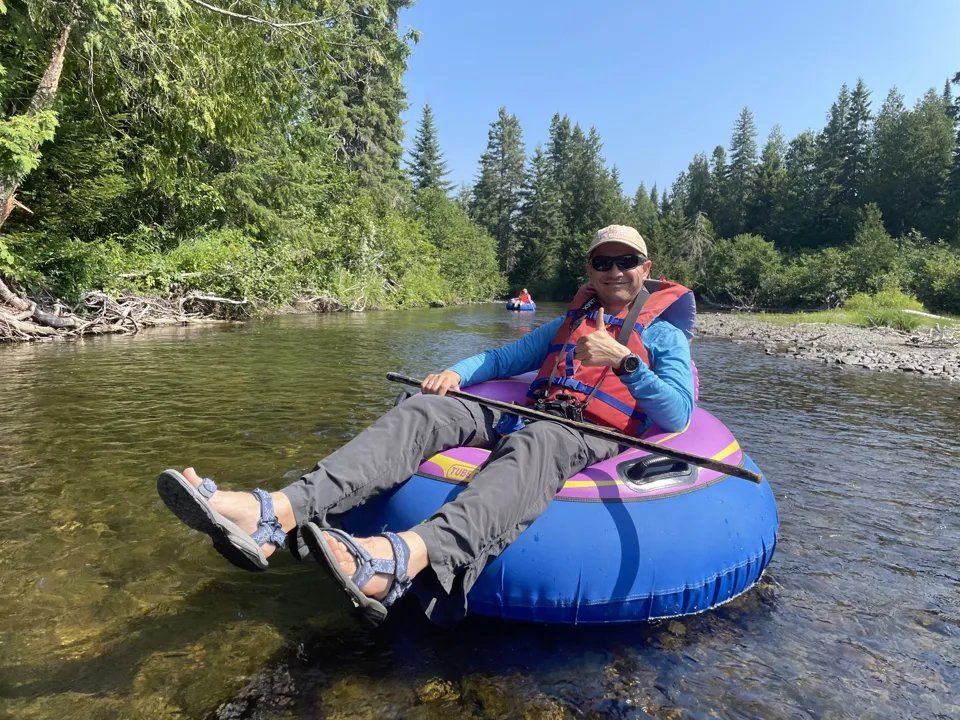
The outfitter was run by one guy who walked us through all the options. Maxim wanted to try tubing, which neither of us had done before, so that was the choice. We hopped into tubes, and floated 4 kilometres downstream to our car. Two and a half hours of drifting along a river, stopping at small sand beaches, finding little “treasures” along the way. Completely different from the hard hike we had planned – and honestly, much better suited for the heat.
With time still left in the day, we headed back to the park and swam in the lake. Clear, cold, exactly what we needed. I don’t always buy the “everything happens for a reason” line, but that day made a decent argument for it.
What we learned: In extreme heat, water activities are the smarter call. River tubing ended up being one of the best surprises of the whole trip.
Day 2 – Kouchibouguac National Park + Lobster Roll #1
Our destination: Kouchibouguac National Park on the eastern coast of New Brunswick, famous for its barrier islands, lagoons, and white sand beaches.
I chose the shorter route on Google Maps. I know – still not learning. The road turned out to be a near-3-hour drive with no cell service. Not difficult, but constantly rolling up and down, with almost no traffic going the other way. At one point, the map wanted me to turn onto another gravel road. This time, I ignored it.
The bigger concern: we knew an out-of-control wildfire was burning somewhere along the route. At some point we started seeing houses – a village was close – and eventually the shoreline and cell service came back.
Updated navigation delivered the news: we were approaching the active fire near Miramichi. The road was closed by police and all traffic was being detoured. In total, the drive took about four hours.
When we stepped out of the car at Kouchibouguac, it felt like walking into a sauna. I don’t remember experiencing that kind of heat in Canada. The visitor centre confirmed: all trails closed, activities limited to the beach, kayaking, and canoeing.
Canoeing the Kouchibouguac River
Canoeing it was.
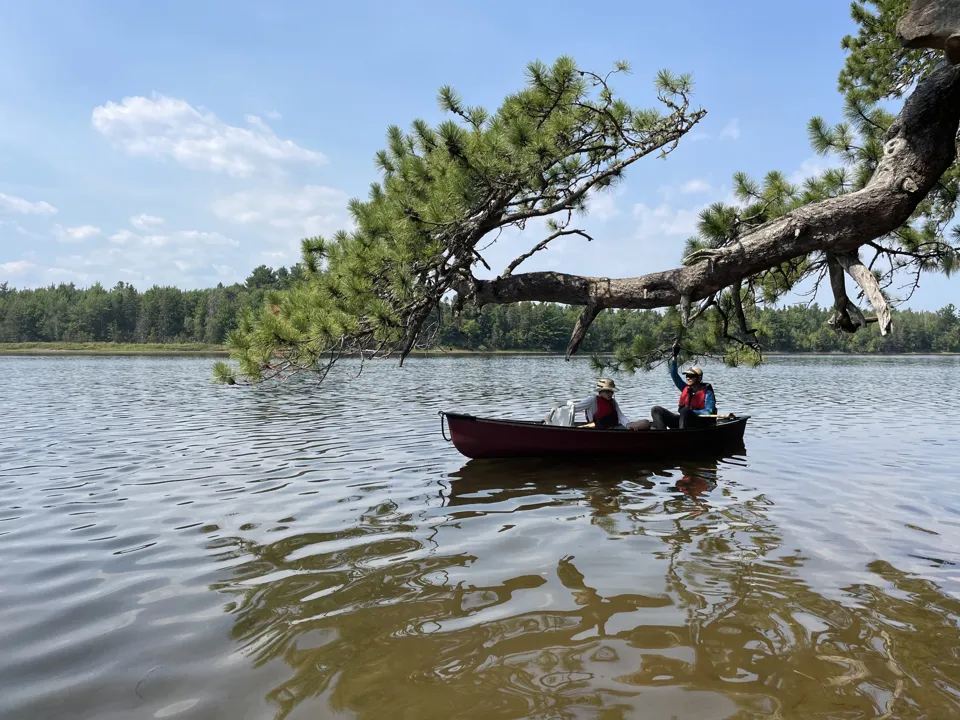
Despite the heat, being on the water made everything manageable. We paddled the Kouchibouguac River while fishing boats arrived one after another on the far bank. It was the first day of lobster season, and everyone seemed to be out. The best spot we found was a large pine tree that had grown sideways over the river. It looked great, but more importantly, it was the only shade on the water.
That evening we pushed on to Moncton. A second out-of-control fire was burning near the city, but we got around it without incident. Before checking in, we stopped at Skipper Jack’s Maritime Restaurant for takeout – lobster rolls for Maxim and me. First one of the trip.
Day 3 – Hopewell Rocks: Sea Kayaking the Famous “Flowerpots”
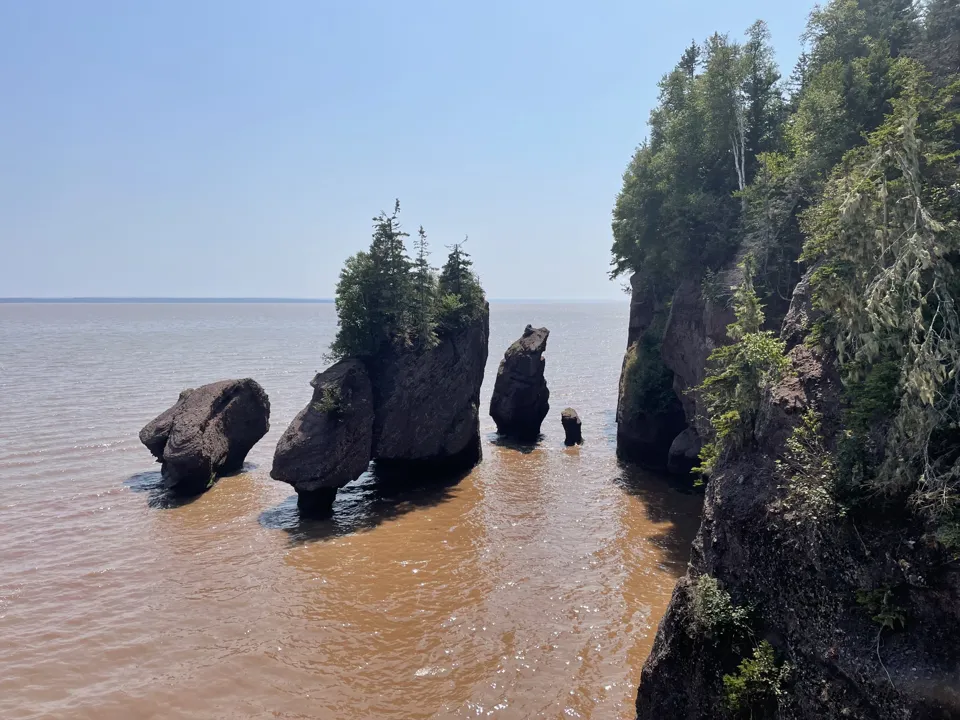
Hopewell Rocks is one of Canada’s best-known natural sites: giant red sandstone columns shaped by the highest tides in the world, topped with trees and nicknamed “flowerpots.” We’d been here once before at low tide, walking on the ocean floor among the formations. This time, we wanted to see them from the water.
All high-tide tours were fully booked for the day. We managed to squeeze into a mid-high tide slot.
After a stop at the gas station, we arrived at the park. Even with a cooler morning than Moncton – and I suspect the ocean breeze was doing the work – there were already plenty of cars. We packed our gear (waterproof box for phones and keys, water bottles, a dry bag for everything else) and walked the easy 15-minute path to Baymount Outdoor Adventures.
Group briefing, equipment fitting, and we were in the water. I paddled with Maxim; Dana teamed up with another woman in the group. The guides were excellent – knowledgeable, funny, with stories for every cove we paddled through.
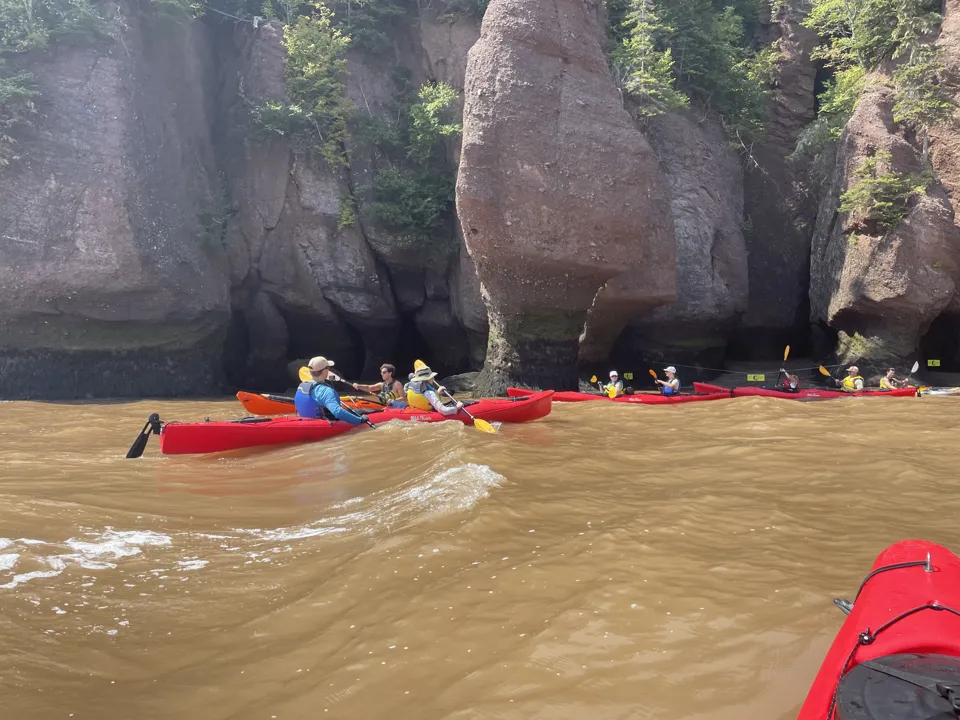
As the tide came in, the wind and waves picked up noticeably. In a canoe, that situation ends with everyone swimming. In the sea kayaks, we barely moved. Water washed over the deck and we barely noticed. The highlight was paddling through a rock arch, the kayak fitting just perfectly. Coming back to shore, I was still replaying that part in my head.
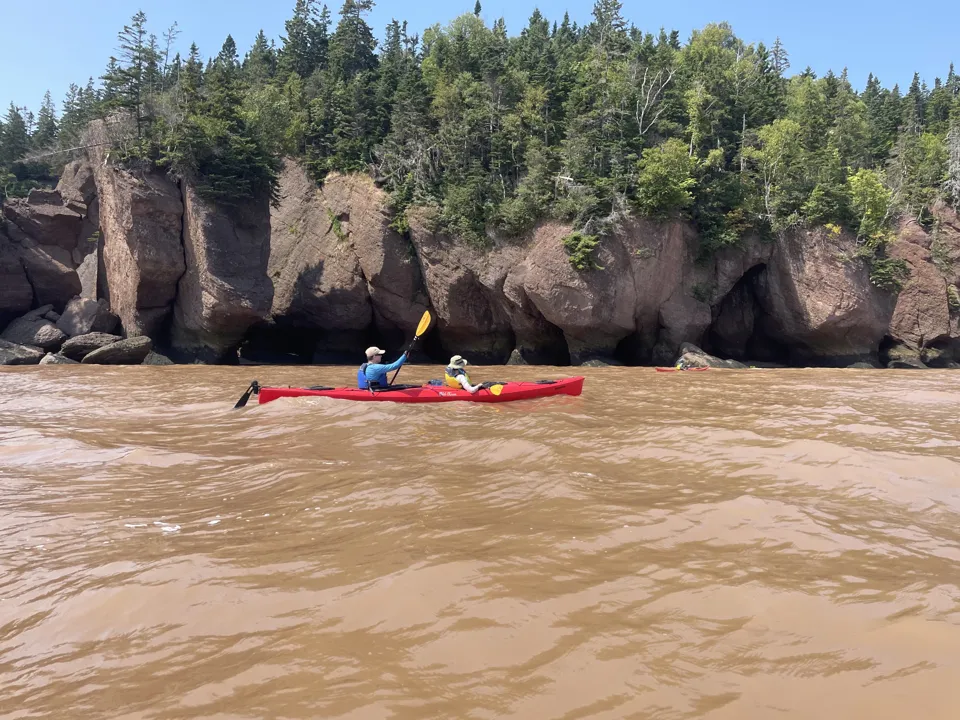
After the tour: quick lunch, a souvenir stop, and a drive toward Sussex. On the way, we stopped in Alma for lobster roll #2, and checked in at the Fundy National Park Visitor Centre – where, predictably, we learned all trails were closed.
Day 4 – Fundy Trail Parkway + St. Martins Sea Caves
The morning was already hot. We left as early as we could, with a stop at the local coffee shop first.
Today’s goal: Fundy Trail Parkway – one of the most scenic drives in New Brunswick, hugging the Bay of Fundy cliffs with viewpoints, beaches, and short trails.
At the entrance, the park staff confirmed almost all viewpoints were closed due to fire risk. Their advice: cross the park quickly, visit St. Martins Sea Caves before the tide covered them, then return to the park for the rest of the day.
We stopped at a few open viewpoints on the way through. The Bay of Fundy views really are worth the pullouts.
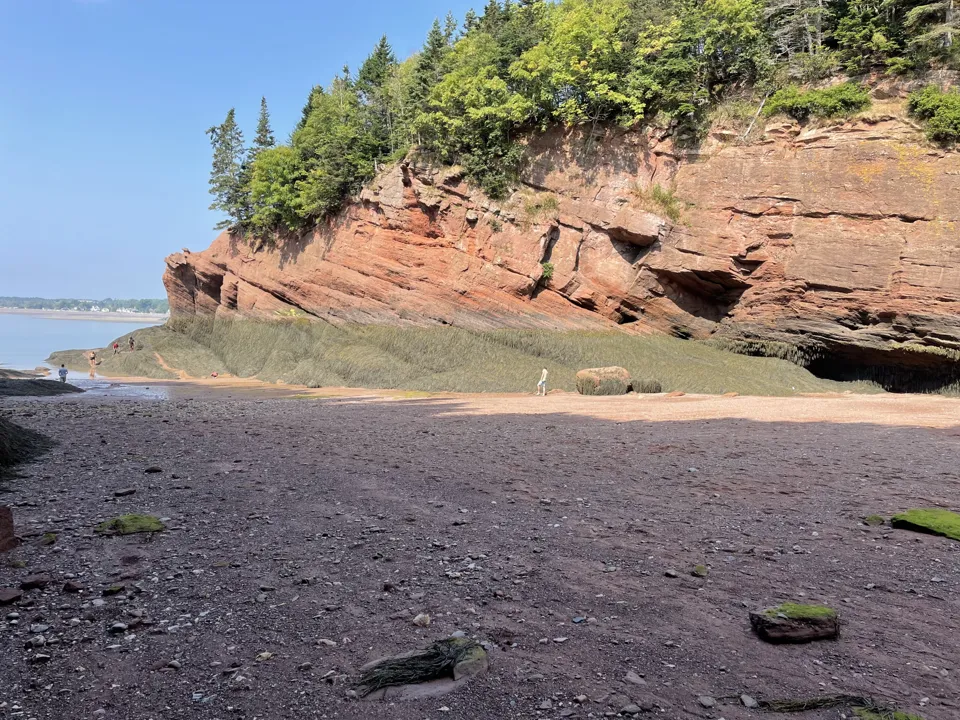
At St. Martins, the caves were accessible and the beach was full of people walking the exposed sea floor. These caves are carved into red sandstone cliffs and only reachable during low tide – when the tide comes in, there’s no way out. We walked to the farthest cave, took photos and videos, and only when we turned back did we realize the water was already rising at the entrance. We made it out walking through ankle-deep water.
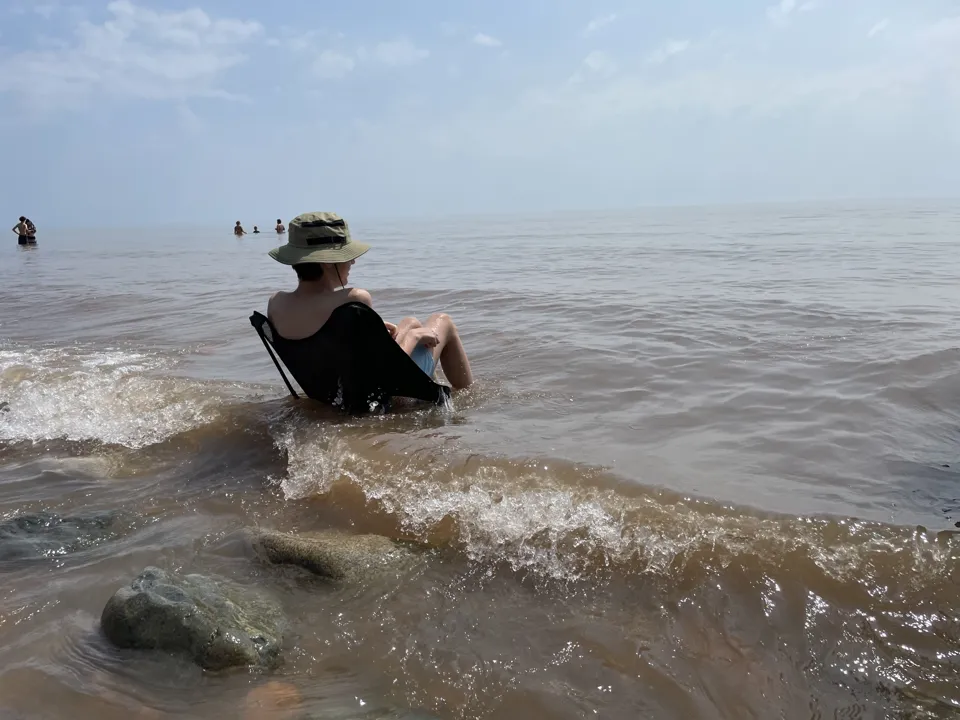
Back in the park, Long Beach was open – it has direct road access, so it falls outside the fire restriction zone. We spent the afternoon swimming and constantly moving our bags ahead of the rising tide.
A third lobster roll at the local restaurant near the caves. Then Saint John for the night.
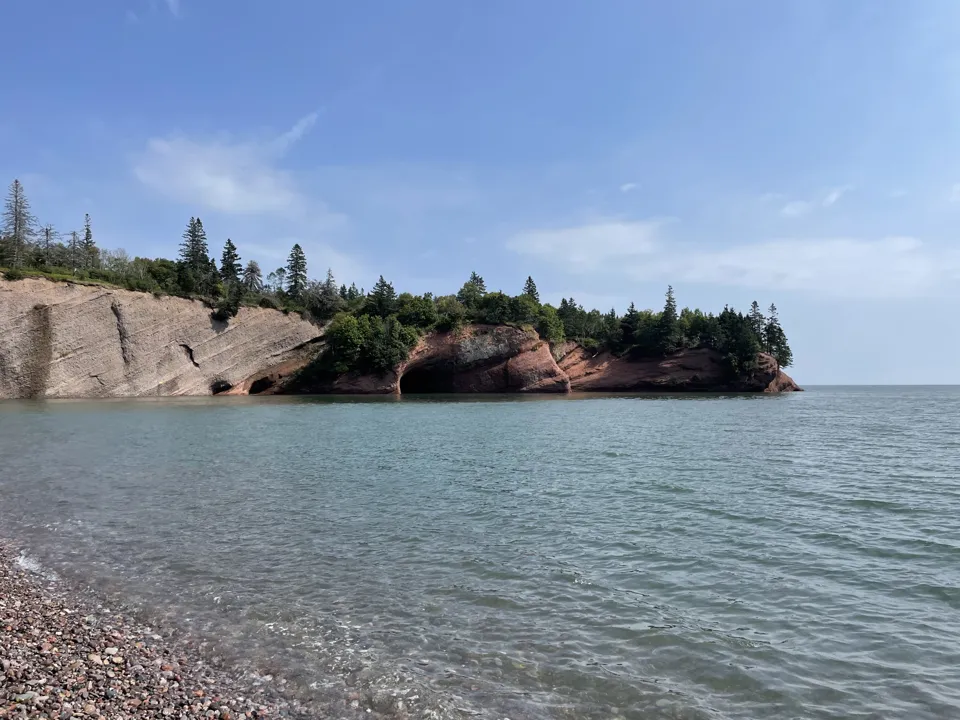
Day 5 – Irving Nature Park: The Hike We’d Been Waiting For
The morning arrived with something new: heavy fog. Visibility was extremely low, but for the first time in days, the fire risk felt manageable.
Our first stop: Irving Nature Park, a coastal wilderness park spread along Taylors Island at the edge of Saint John. And the sign at the entrance confirmed what we’d been hoping to hear: the park was open for hiking.
We started on a 250-metre boardwalk that leads through the marshes. Walking through dense fog with birds calling and the smell of the sea around us felt completely different from the previous few days.
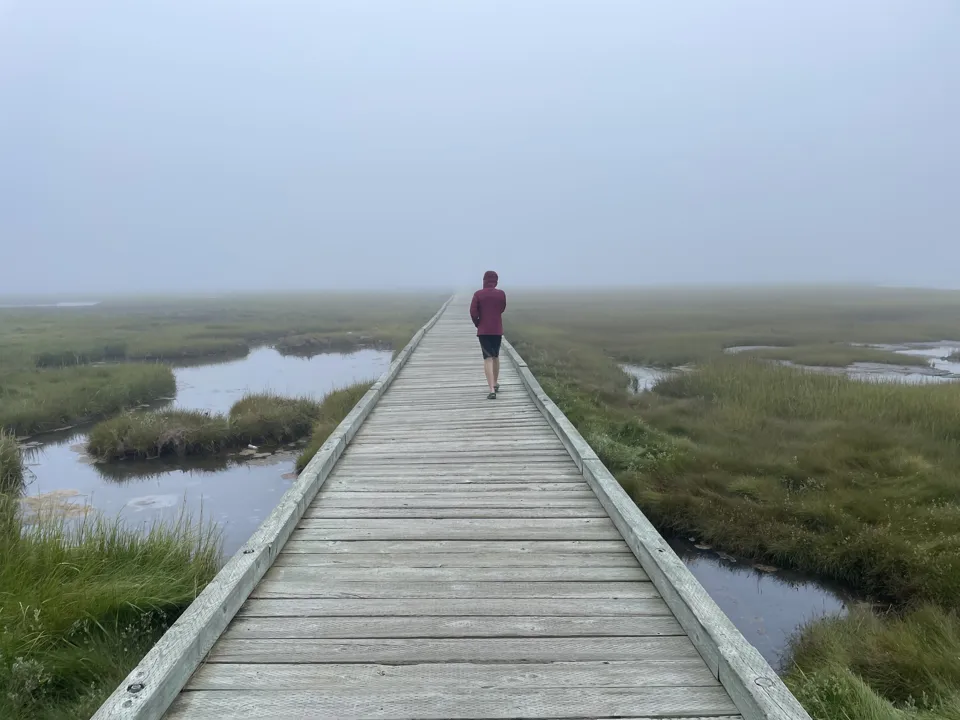
Then we pushed onto the coastal trail along the shore of the island. The fog, the approaching tide, the seabirds, and the distant cries of seals made it one of the most memorable hikes of the trip. After days of closed signs, just being on a proper trail again felt like a reward.
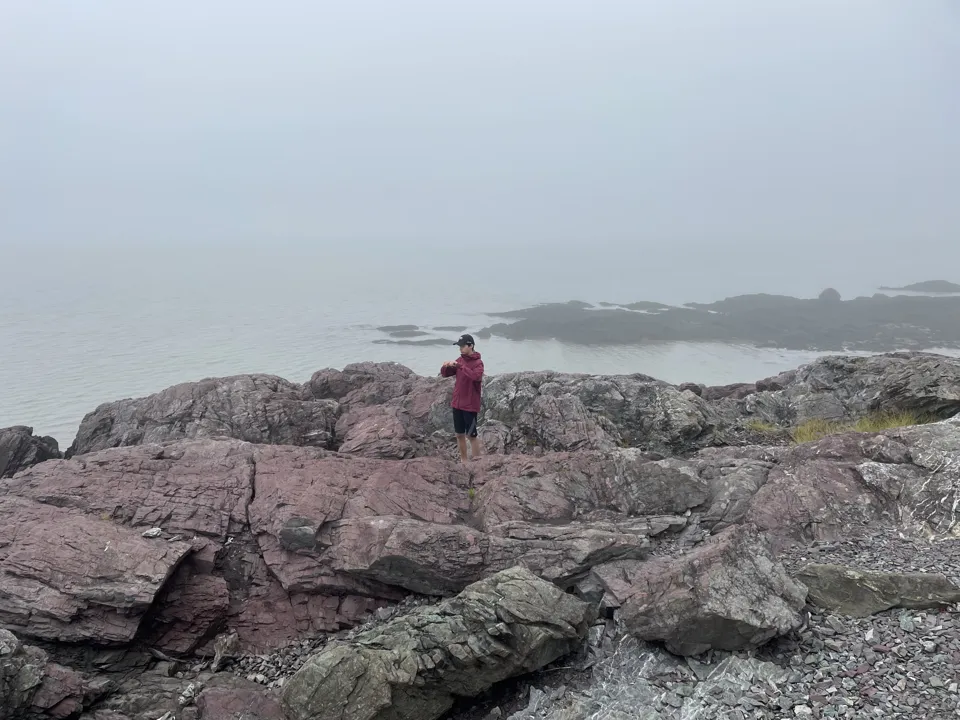
After the hike, lunch at Harbour Road Pub & Eatery (lobster roll, of course – keeping the count going).
Before heading toward Fredericton, we made a short detour to St. George Falls Upper Bridge to catch the sound of rushing water. A small stop, but a good one.
The drive to Fredericton that day was mostly on a quiet, almost empty road through the interior of the province. On both sides: blueberry fields as far as you could see. It was a completely different New Brunswick from the coast.
Day 6 – World’s Largest Axe, Water Bikes on Mactaquac Lake, Grand Falls
After breakfast at a local coffee shop, we pointed the car west toward Quebec – but with a few stops still ahead.
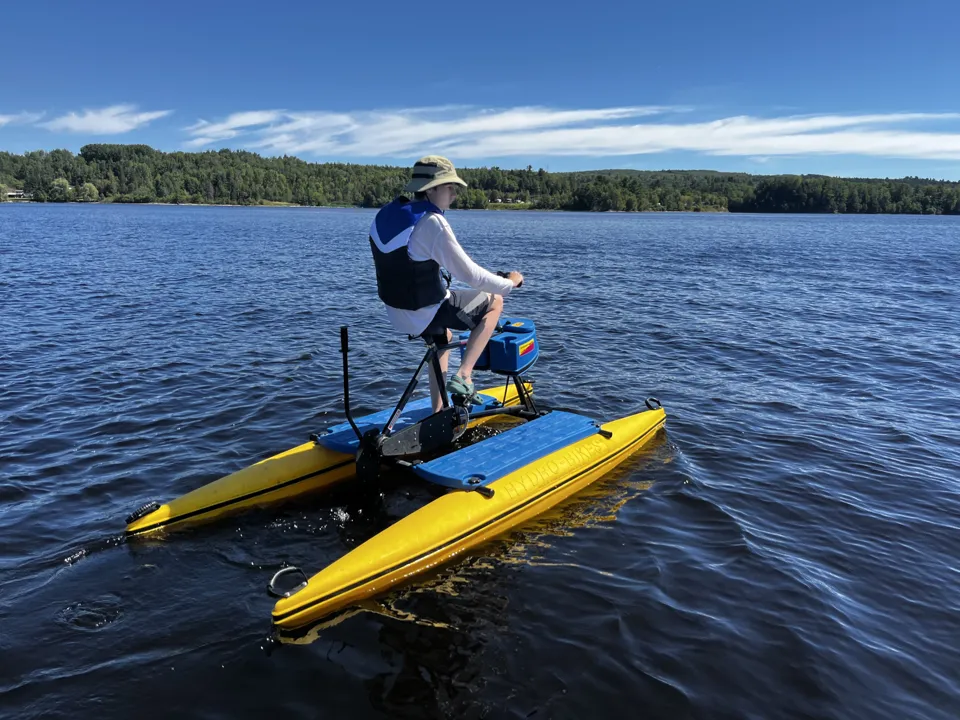
First: the World’s Largest Axe in Nackawic. We’d stopped here years ago on a different trip through NB. This time we decided to actually do something: rent water bikes and paddle Mactaquac Lake.
Water biking was a first for all of us. The concept is simple – pedal-powered pontoon bikes on the water – but it was more fun than I expected. The main challenge was weeds getting caught in the propellers. We figured out quickly how to avoid them.
Next: Grand Falls. Ample parking, dramatic views of the canyon and the waterfall, and a short hiking trail along the rim. Despite the heat, the hike was well worth it.
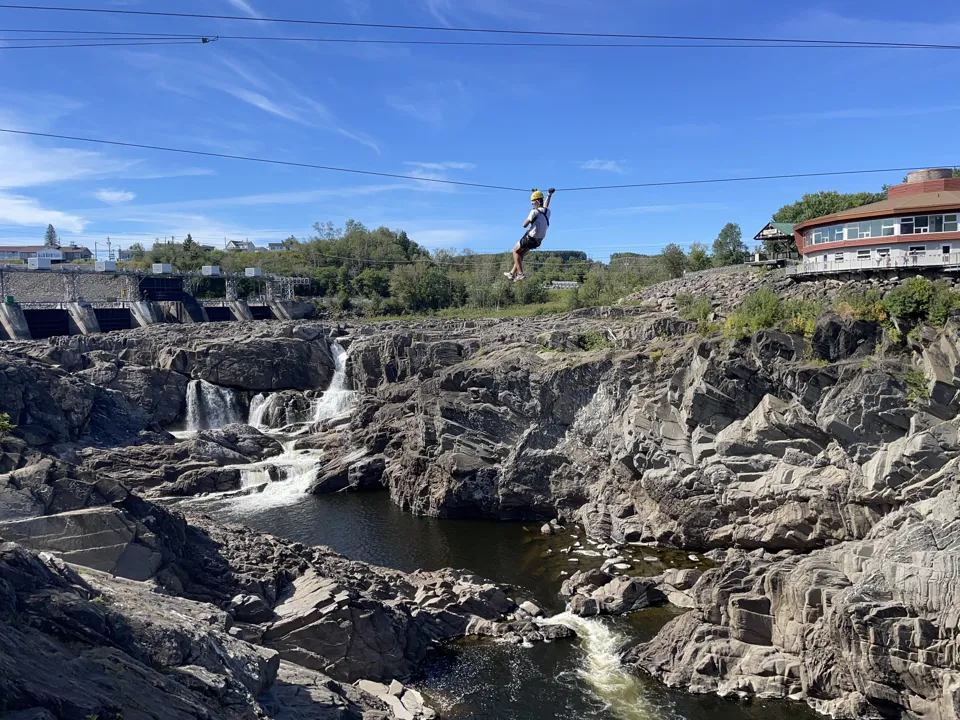
Dinner was picked up at L’Écluse – halte gourmande on the way. We finished the day already back in Quebec, checked in to Hôtel 1212.
Day 7 – Drive Home (With One Last Detour)
Not much happening today besides the long drive home. We made one stop at Belvédère de la Croix to stretch our legs and take in the view, and grabbed the final lobster roll of the entire trip at Chez Mag La Fine Cantine.
Practical Tips for Your New Brunswick Road Trip
Getting Around
- Cell service is unreliable in rural and forested areas – download offline maps before you go (Google Maps, Gaia GPS, or similar). Seriously. Do this.
- Scenic routes look faster on the map. They’re often not.
Booking Activities in Advance
- Hopewell Rocks kayaking fills up fast, especially in peak season. Book Baymount Outdoor Adventures at least a few weeks ahead. High-tide tours go first.
- Park entrance fees apply at Kouchibouguac and Fundy Trail – have cash or card ready.
- Fundy Trail Parkway charges a vehicle entry fee even if you’re just driving through.
- Go off the highways if possible and drive the famous scenic routes.
Weather and Wildfires
- The summer of our visit was affected by significant wildfires and a heat wave across Eastern Canada. Trail closures were widespread and changed daily. Always check with park visitor centres before heading to a trailhead – they have the most up-to-date information.
- Water activities are an excellent alternative when trails are closed. New Brunswick has exceptional options on rivers, lakes, and the coast.
Tides
- The Bay of Fundy has the highest tides in the world – up to 16 metres. This affects everything from kayaking windows to beach access.
- At St. Martins Sea Caves, check the tide schedule before visiting and give yourself time to get back. The change is faster than it looks.
- The Fundy tide schedule is widely available online and at all park visitor centres.
Food
- Lobster rolls are everywhere in the Maritimes during lobster season (which opens in late summer). They vary enormously in quality and size – the ones at the roadside spots near Fundy were standouts.
- Stock up at local microbrasseries and farm stands when you see them. Novum Boreas near Mount Carleton and Big Axe Brewery near Big Axe were both worth the stop.
Accommodation
- B&Bs are plentiful and often better value than hotels.
- Book early in summer – the Maritimes are genuinely popular and good properties fill up.
Highlights by Activity Type
Best for kayaking: Hopewell Rocks (Baymount Outdoor Adventures) – sea kayaking through arches during high tide is unlike anything else.
The best for canoeing: Kouchibouguac National Park – calm river paddling with wildlife and the backdrop of lobster fishing boats.
Best for hiking: Irving Nature Park, Saint John – coastal trail in the fog with seals and seabirds. Completely underrated, especially when everything else is closed.
Best for swimming: Mount Carleton Provincial Park lake – crystal clear, cold, beautiful.
Most unexpected activity: River tubing near Mount Carleton – relaxed, fun, and perfect for the heat.
Best waterfall: Grand Falls – dramatic canyon views and a proper rim hike.
Most unique experience: St. Martins Sea Caves at low tide, then returning at high tide to see the same spot fully submerged.
Frequently Asked Questions
Planning Your Trip
Is New Brunswick worth visiting?
Yes. Most travellers pass through on the way to Nova Scotia or Prince Edward Island, but New Brunswick has its own coastline, national parks, world-record tides, and enough variety for a full week. We left with more still on the list.
How many days do you need for a New Brunswick road trip?
Seven days is a good minimum for Mount Carleton, Kouchibouguac, Hopewell Rocks, the Fundy Trail, and the Saint John area. Two weeks would let you add the Acadian Coast, Fredericton, and more time in each park.
When is the best time to visit New Brunswick?
Late June through September offers the best weather. July and August are peak season – warmer, busier, and the best time for sea kayaking and beach activities. If you want to see fall foliage, late September through mid-October is spectacular.
Can you hike in New Brunswick in summer?
Usually yes – but wildfires can lead to trail closures in dry years, as we experienced. Always check with provincial parks before you go and have a backup plan. Water activities are widely available if trails are closed.
Parks and Activities
What are the Hopewell Rocks?
The Hopewell Rocks are giant sandstone columns on the shore of the Bay of Fundy, sculpted over thousands of years by the world’s highest tides. At low tide you can walk on the ocean floor among them; at high tide the bases are completely submerged and you can kayak between the formations.
Is sea kayaking at Hopewell Rocks safe for beginners?
Yes. Baymount Outdoor Adventures runs guided tours with proper instruction and equipment. No prior kayaking experience required. Sea kayaks are highly stable – even in choppy tide conditions.
What is Kouchibouguac National Park known for?
Kouchibouguac (pronounced “koo-SHI-boo-gwak”) is known for white sand barrier islands, warm lagoons, cycling and paddling routes, and wildlife including grey seals. It also feels much quieter than many national parks in Eastern Canada.
What is the Fundy Trail Parkway?
The Fundy Trail Parkway is a 16-kilometre scenic road hugging the north shore of the Bay of Fundy, with pullouts, viewpoints, beaches, and short hiking trails. St. Martins Sea Caves are accessible from the road and one of the best tidal experiences in the province.
Practical Details
Is New Brunswick bilingual?
Yes. New Brunswick is Canada’s only officially bilingual province, with both English and French as official languages. You’ll see signs, menus, and services in both. The Acadian French culture is especially present along the eastern and northern coasts.
Final Thoughts
New Brunswick surprised us at every turn. The fires forced us to improvise, but that was only part of it. The province feels raw and unhurried. The scenery changes constantly, and the water is everywhere: rivers, lakes, tidal bays, the ocean.
If you come expecting everything to be polished and easy, you might find it rough around the edges. If you come ready to adapt, it can give you a better trip than the one you planned.
We didn’t summit Mount Carleton. We didn’t hike a single trail in the first four days. We left with a full list of things to come back for.
That’s usually the mark of a trip worth taking.
Enjoyed this guide? Watch the full New Brunswick road trip video – and follow us on Instagram for more adventures.
Leave a Reply